How school districts and local governments score RFPs
See how school districts and local governments score RFPs, step by step, from the compliance check and rubric to the price formula and board vote.

Vendors sometimes assume the lowest price wins a government RFP. It rarely works that simply. In this article you’ll discover how school districts and local governments actually score RFPs.
TL;DR: How school districts and local governments score RFPs
School districts and local governments generally screen proposals for compliance, then evaluate them against the RFP’s published criteria and relative importance. Technical fit, experience, implementation, and price often contribute to the result. Some buyers add demos or revised offers before an authorized official or board approves the award.
1. Procurement screens every proposal for compliance
Before any evaluator sees a proposal, procurement staff screen it for responsiveness.
The buyer’s logic is defensive. Waiving a material requirement for one vendor can treat other bidders unequally and invite a protest. Some rules allow minor informalities to be corrected or waived.
Here are the most common eliminators of proposals from procurement:
- Missing signed forms, such as the bid form or a non-collusion affidavit
- Unacknowledged addenda, which suggest you bid on outdated specs
- Missing certificates of insurance at the coverage levels the RFP requires
None of these items involve your product. However, they can still end your bid before a single point is awarded when the missing item is a material submission requirement.
Also, late submissions are generally rejected, even if they are only a few minutes late. Any exception must be permitted by the applicable rules, so plan to submit well before the deadline.
Build a compliance checklist from the submission requirements and have someone outside the writing team verify it. Starbridge’s AI RFP Finder & Proposal Writer builds that compliance matrix automatically, mapping every requirement in the RFP to a section of your response.
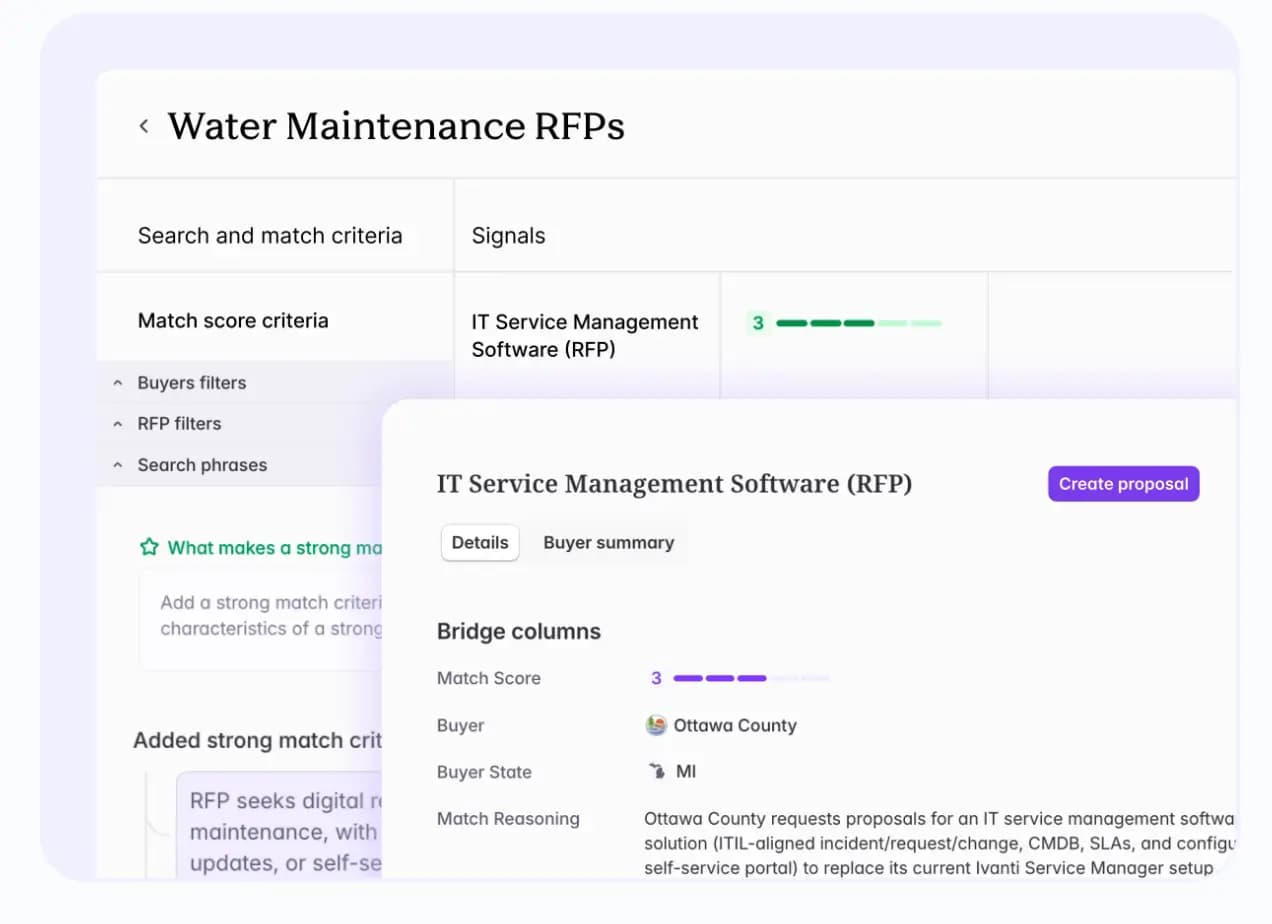
Book a demo today to learn more.
2. Evaluators score the technical response against the rubric
Proposals that pass the compliance check go to the evaluation committee.
Many buyers have evaluators score independently first, working through the score sheet, assigning points per criterion, and writing a short justification.
Who sits on the evaluation committee
Most committees include procurement staff, end users from the department that will use the product, and IT. Some panels add curriculum leads in K–12 or finance staff who review cost and budget fit. Each member reads your proposal through a different lens.
IT often carries more weight than the other departments.
A failed security or integration review can stop an award no matter how well end users scored you. At some accounts IT acts as a gatekeeper, and at others IT is the core decision-maker. Write security and integration answers as if the IT evaluator holds a veto, because at many buyers that evaluator does.
What the rubric scores
Most best-value RFPs score some version of the same five criteria:
- Technical approach and fit with the scope of work
- Experience and past performance with similar buyers
- References from comparable clients
- Implementation plan, including timeline, staffing, and training
- Price, usually scored by formula
An illustrative weighting might give technical approach 40%, experience 30%, and price 30%. Real weights vary by buyer and category, so always work from the RFP’s own table. When federal funds pay for the purchase, federal grant rules require requests for proposals to be publicized and to “identify all evaluation factors and their relative importance,” so the weights are in the document.
State law can set the criteria outright. Among the factors Texas school districts must consider are purchase price, vendor reputation, quality, how well the offering meets the district’s needs, the vendor’s past relationship with the district, and total long-term cost. That “past relationship” factor quietly favors the incumbent.
Best-value RFPs differ from conventional sealed bidding. IFBs often award to the lowest responsive, responsible bidder, subject to the applicable law. RFQs can mean requests for quotations or qualifications, with different selection rules. Responsive means the bid meets material requirements, and responsible means the vendor can deliver.
How K–12 and city or county rubrics differ
School districts and cities or counties can use similar scoring mechanics while rewarding different strengths. The examples below illustrate education software and municipal technology purchases.
| Scoring factor | K–12 school districts | Cities and counties |
|---|---|---|
| Heavily weighted fit | Curriculum alignment | Integration with existing systems |
| Compliance focus | Student data privacy agreements | Security and compliance reviews |
| Added scoring factors | Teacher adoption | Local or small-business preferences |
How to make points easy to award
Evaluators work through a stack of proposals, often on top of their regular jobs, and the easiest proposal to score often scores highest.
Mirror the rubric’s structure and wording, with one section per criterion and headings that match the RFP. Pull win themes from the highest-weighted criteria and the language the buyer repeats across the document.
Points typically slip away in predictable places:
- Generic boilerplate that never names the buyer’s goals
- Answers that don’t map to a specific criterion
- Implementation plans with no risk mitigation
Use the Q&A period and pre-proposal conference to clarify how a criterion will be scored. Starbridge’s AI proposal writer drafts each section from your product knowledge base, so teams can create proposals in half the time and spend the saved hours tailoring the answers that carry the most points.
3. The committee meets to agree on consensus scores
After the procurement quality check and individual scoring, the committee meets to resolve differences.
Some buyers agree on a single consensus score for each criterion. Others simply average the individual scores.
Consensus is where a clearly mapped proposal holds its points. An evaluator who can point to the exact page that answers a criterion wins the argument in the room. An evaluator who has to defend a vague answer usually concedes the point.
4. Procurement opens the cost proposals and applies the price formula
Many buyers keep the cost proposal sealed until technical scoring ends. Separating the two keeps a low price from coloring how evaluators read the technical response.
Once technical scoring is complete, price is scored using a formula rather than subjective judgment. One common formula, used in Georgia’s state procurement manual, is:
Price score = (Lowest bid ÷ Your bid) × Maximum price points
For example, if price is worth 30 points and the lowest bid is $80,000:
- $80,000 bid: earns all 30 points.
- $100,000 bid: earns 24 points.
The second bid is 25% more expensive but loses only 6 points. That means a higher-priced vendor can still win with a stronger technical proposal.
The table below compares both bids using an illustrative 40/30/30 scoring system, assuming equal experience scores.
| Score component | Vendor A | Vendor B |
|---|---|---|
| Bid amount | $80,000 | $100,000 |
| Technical approach (40 max) | 28 | 36 |
| Experience (30 max) | 25 | 25 |
| Price (30 max) | 30 | 24 |
| Total (100 max) | 83 | 85 |
Vendor B wins despite the higher price, because 8 technical points outweigh 6 price points.
However, not every formula is that forgiving.
Pennsylvania’s scoring formula, for example, subtracts the percentage gap from full points, so a bid 50% above the lowest keeps only half its cost points, compared with two-thirds under the ratio method.
Check which formula the RFP uses before deciding how hard to discount.
Federal buyers formalize the same idea as a best value continuum, with tradeoff and lowest price technically acceptable (LPTA) methods under FAR 15.101. Local buyers mostly run simpler, point-based versions.
5. Finalists present, demo, or submit a best and final offer
Some buyers invite shortlisted vendors to oral presentations or product demos.
Committees often rescore after demos, since a live answer can confirm or contradict what the written proposal promised. Treat the demo as a scored section, built around the same criteria as the written response.
When final scores are close, the buyer may call a best-and-final-offer (BAFO) round. Shortlisted vendors get one more chance to sharpen prices or terms, usually on a common deadline. Any further negotiations or revisions must follow the applicable procurement rules.
6. The committee recommends an award for approval
Procurement checks references for the top-ranked vendor. The committee then writes an award recommendation, which may go into a board or council packet for a vote in a public meeting.
The committee that scores your proposal rarely makes the final call.
The award authority may rest with an elected or appointed body, such as the school board, city council, or county commission, or with an official acting under delegated authority. When a board vote is required, its meeting calendar affects your contract timeline.
How formal any of this gets depends on state law and purchasing thresholds.
A purchase above the buyer’s threshold generally requires a prescribed procurement method unless an exception or authorized contract vehicle applies. Thresholds vary widely by state, city, and district.
Since September 2025, Texas school districts must use an authorized procurement method for covered purchases of $100,000 or more in aggregate over 12 months, subject to statutory exceptions.
California school districts’ adjusted bid threshold for covered equipment, supplies, and nonconstruction services is $119,100 for 2026, with separate rules for public works.
Board approval thresholds vary by district too. In Oklahoma, Union Public Schools requires board approval for acquisitions of $100,000 or more. That approval step ties many K–12 procurement timelines to the board meeting calendar.
7. The buyer announces its intent to award and opens a protest window
Around the vote, the buyer issues a notice of intent to award. A protest period follows, set by state or local rules, when losing bidders can challenge the process.
In Florida, for example, a bidder has 72 hours after the notice is posted to file a notice of protest. The contract isn’t final until that window closes. For the full path from public notice to purchase order, see our guide to government and education procurement.
Request a debrief after every award, win or lose. Where debriefs are available, procurement staff may explain where you gained and lost points, providing valuable competitive research.
Winners should ask too, since a debrief shows which sections carried the score.
How to use a buyer’s past scoring to plan your next bid
Every step above leaves a paper trail. Under state open records laws, most local buyers treat past score sheets, award recommendations, and winning proposals as public records.
Start with these sources:
- Board packets that include the committee’s award recommendation
- Scoring summaries attached to board or council minutes
- Past bid tabulations posted on the procurement portal
A request under the applicable state public records law can return evaluator score sheets and the winning proposal, subject to disclosure exemptions and redactions.
By hand, that means finding the right records officer, filing the request, and waiting weeks per account.
Starbridge’s Public Spend Intelligence surfaces that context without the wait. It shows full incumbent contracts with pricing, opt-out clauses, and expiration dates, and for a specific completed RFP, Starbridge can request the winning response and final pricing on your behalf. Depending on state law, the same request can return scoring sheets and evaluator notes.
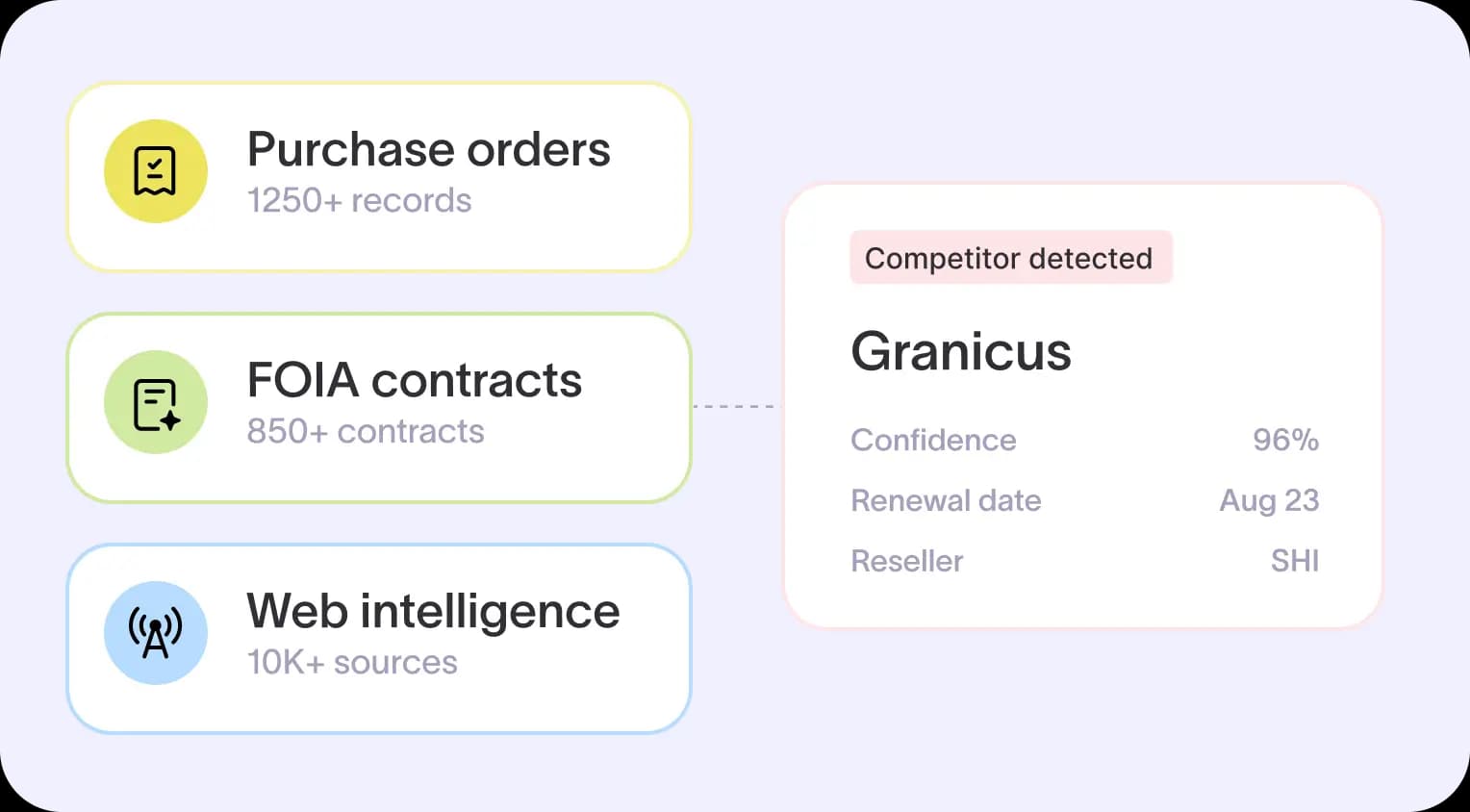
Frontline Education cut its account research time by 90% with Starbridge. Book a demo today to learn more.
Why the rubric is decided before the RFP is published
Buyers rarely know every option, so they consult vendors early. The vendor who educates the buyer shapes the criteria and weights.
Buyers often shape requirements with vendors before an RFP is issued, so the published rubric may already reflect whoever got there first.
The window opens with buying signals, early signs of planned spending such as a board discussion, a new grant, or a contract about to expire.
A buying signal may lead to an RFI that informs the RFP draft and published criteria. RFI responses and industry days can inform that process. Follow the buyer’s communication rules, including any restricted-contact period.
Spotting those moments by hand means reading every board’s minutes.
Starbridge’s Buying Signals Monitor tracks 320k+ government and education entities for board discussions, budget approvals, and contract expirations.
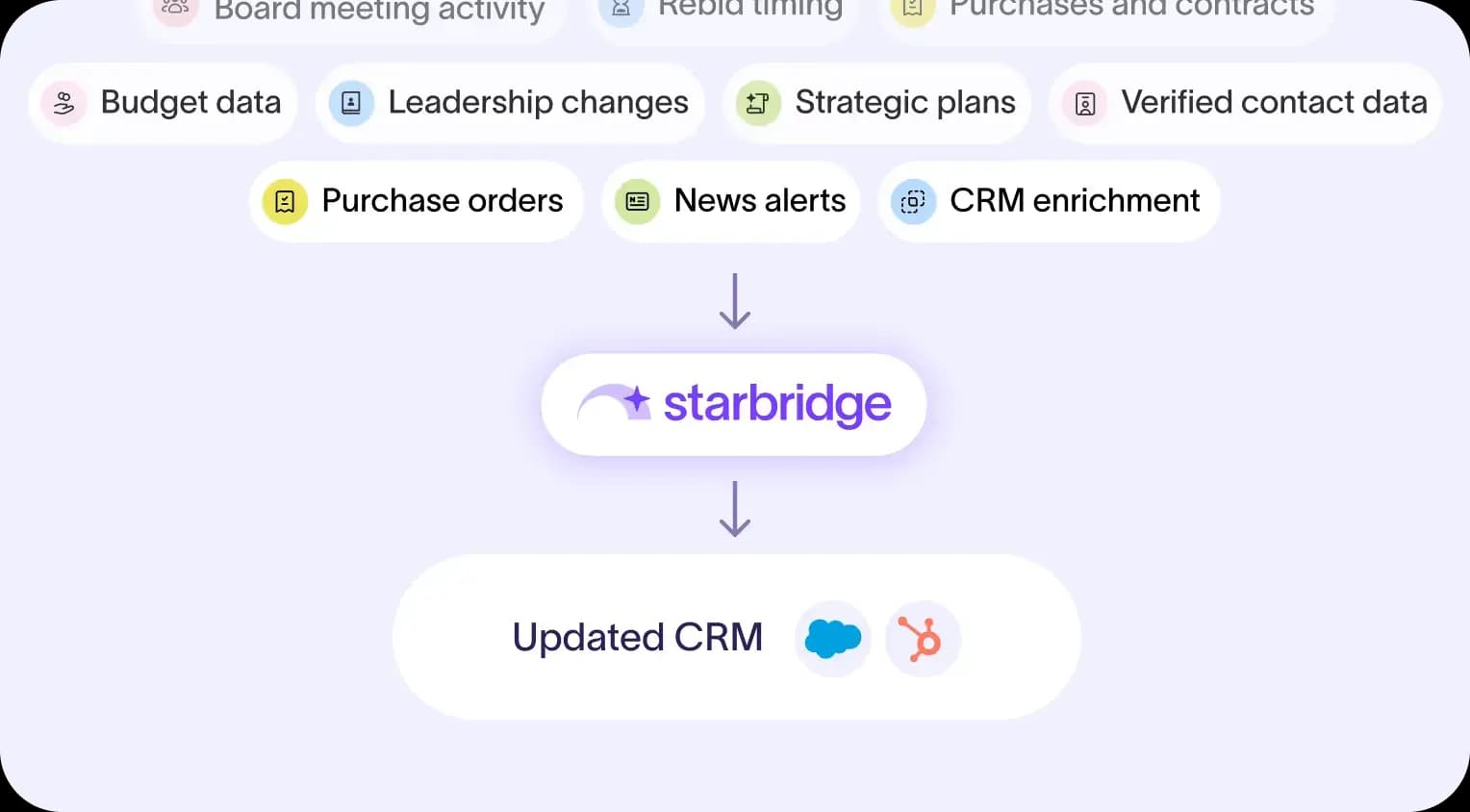
Starbridge flagged a district board discussion about forming a teacher committee for InquirED, and its team reached out before the district had written its evaluation rubric. InquirED ended up designing the rubric, and uncovered $200,000 in new pipeline in its first quarter on Starbridge.
Sometimes the best rubric is the one the buyer never has to use. Cooperatives such as TIPS and BuyBoard serve school districts, cities, and counties.
Starbridge includes Contract Vehicle Access in the platform, so a won deal need not wait on a full new RFP, and the platform handles compliance, paperwork, and renewals.
RFP points are won before the proposal is due
Scoring rewards the vendors who read the rubric early and make every point easy to award. Start with one target account. Pull the score sheets from its last award in your category, then check the next RFP it publishes against what you learned.
The bigger edge comes months before any RFP. Starbridge is the AI GTM platform for companies selling to local government, K–12, and higher education. Teams use Starbridge to prioritize the right accounts, engage the right people earlier, and carry a deal from buying signal to signed contract.
Book a demo to find buying signals before the RFP and win more deals.
Frequently asked questions
A district committee scores each proposal against the criteria and point values published in the RFP. Curriculum alignment, student data privacy, and teacher adoption often carry extra weight. Many districts also require school board approval for purchases above a set dollar amount, which varies by district.
Price weight varies by RFP and appears in the evaluation section. In best-value RFPs, price often converts to points with a formula, commonly lowest price ÷ your price × maximum points. IFBs often use lowest-responsive-and-responsible-bidder rules, while RFQ selection methods depend on whether the buyer is requesting quotations or qualifications and on applicable law.
In most states, yes. Score sheets, award recommendations, and the winning proposal may be available through a state public records request, subject to disclosure exemptions and redactions. Ask for a debrief first, then file the request.
Federal agencies follow the Federal Acquisition Regulation, which defines formal tradeoff and LPTA methods. Local government and education buyers follow state law and local purchasing policy, usually with simpler point-based rubrics and a price formula. Local awards often also require a board, council, or commission vote.
Missing signed forms, unacknowledged addenda, and missing insurance certificates are the most common eliminators. Late submissions are generally rejected under the applicable rules. Material omissions can disqualify a proposal, while some minor informalities may be corrected or waived where the rules permit.
Explore our use case library
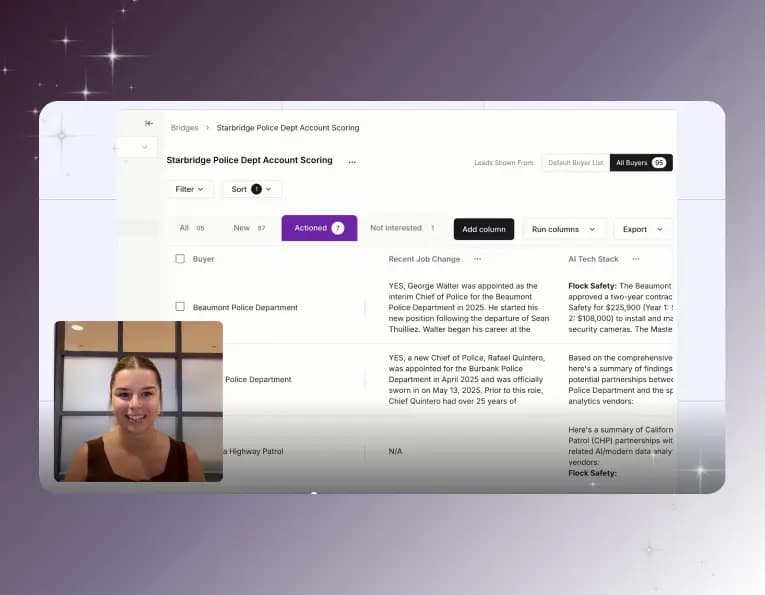 Automate account research with AI agentsStop manually researching accounts. Starbridge AI agents automate account research by monitoring buying signals 24/7 and surfacing the right contacts.
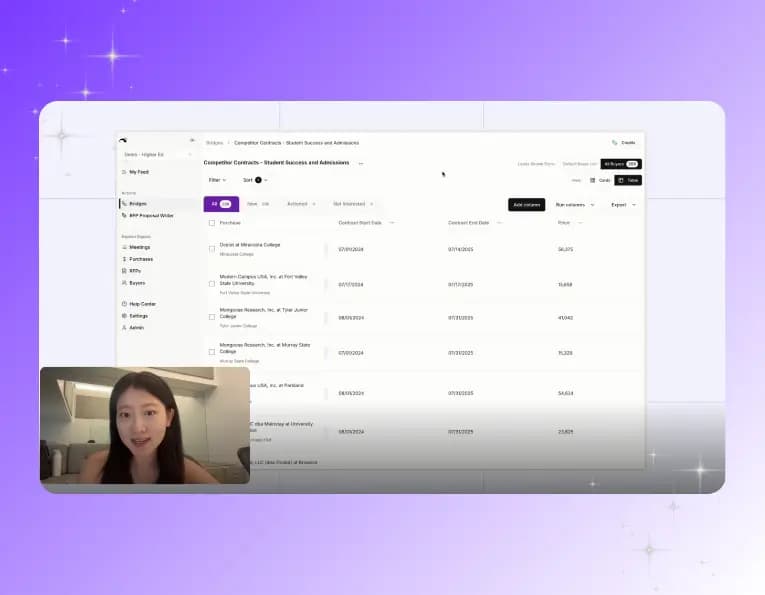 Identify competitor contract expiration datesThe RFP is usually a formality. Starbridge surfaces competitor contract expiration dates so your reps reach accounts before the renewal cycle closes.
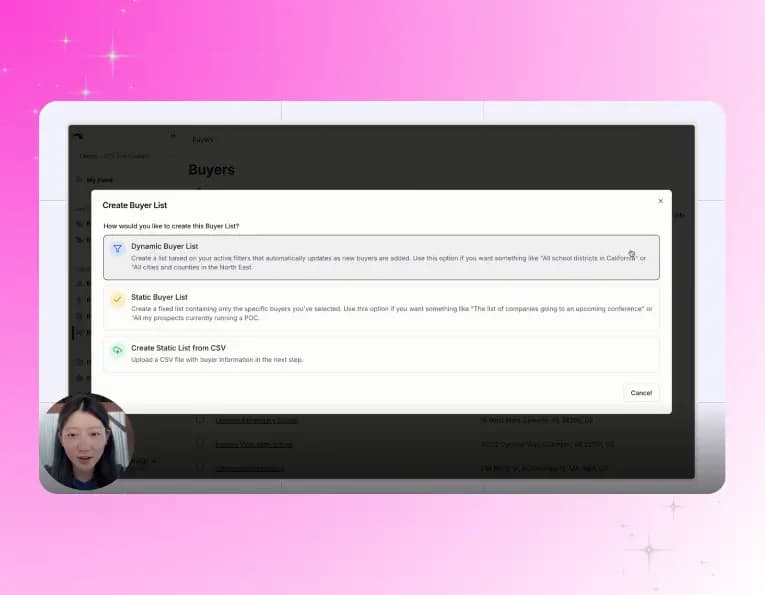 Create a conference campaignTurn conference badge scans into pipeline. Import your contact list, surface buying signals across every account you met, and follow up with context.