Compare ChatGPT, Claude, Gemini against Starbridge for public sector sales teams
Run 3 prompts yourself to compare with Starbridge.
 | ChatGPTClaudeGemini | |
|---|---|---|
| Contract dataFrom FOIA requests including incumbent vendors, expiration dates and contract valuesView test 1 | Yes | No |
| Verified public-sector contactsBounce-checked and continuously updatedView test 2 | Yes | Limited |
| CRM IntegrationsNative bidirectional sync with configurable fields, run conditions, and audit loggingView test 3 | Yes | Partial |
| Starbridge MCPAccess public sector sales intelligence directly in any AI toolSee how it works | Yes | Yes |
Based on running the prompts below in ChatGPT as of September 2026. Tools change, so run them yourself.
Don’t take our word for it. Run the prompts.
Test 1: Contract and purchase order data coverage
The prompt
For this list of 50 cities, please tell me who their current ERP is, when that contract expires, and how much the contract is worth. Use only verified contract data from public records.
The list of 50 cities is added automatically when you run or copy the prompt.
ChatGPT
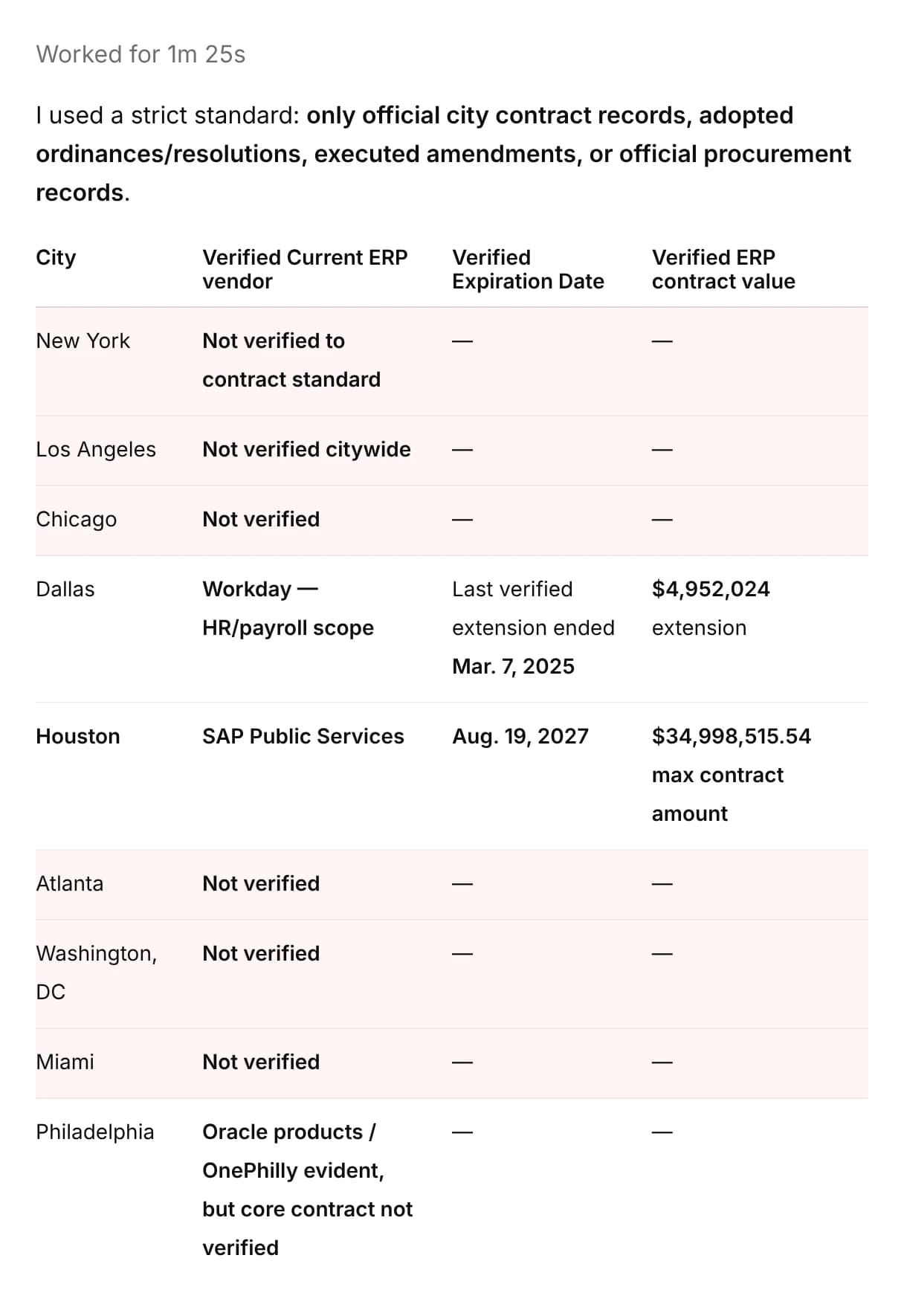
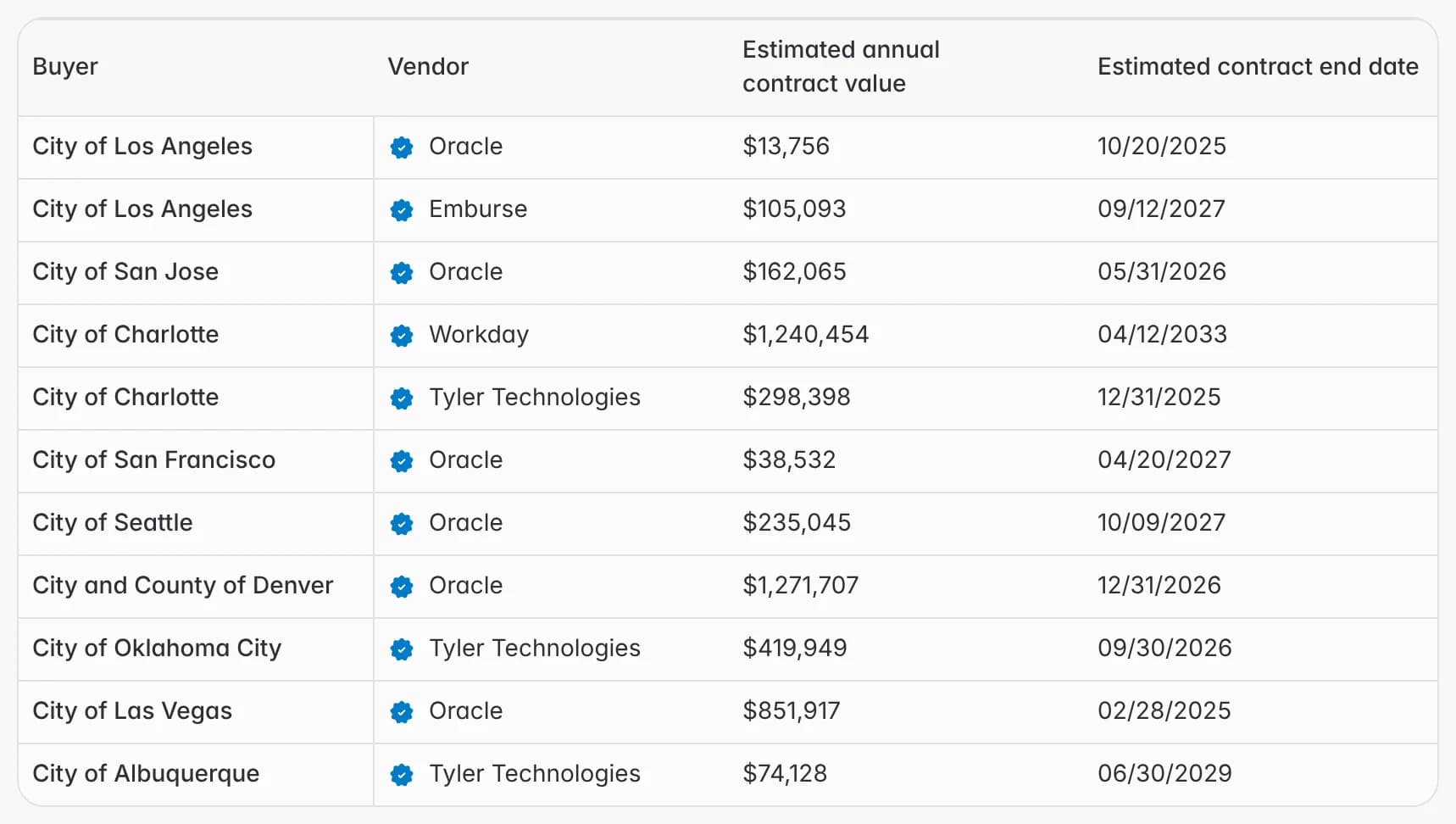
Why Starbridge contract data is better than general AI
- A general AI assistant can only answer from what it can read on the open web.
- SLED contract data isn’t openly available, centralized, or clean.
- Much of it is only available through highly manual FOIA requests (Freedom of Information Act).
- Starbridge collects and cleans those contract records ahead of time, so the incumbent vendor, expiration date, and contract terms are ready when a rep asks.
Test 2: Verified public-sector contacts
The prompt
Please give me the emails for all of the CIOs of the cities below. Only use official public sources like .gov and .edu domains to ensure accuracy.
The list of 50 cities is added automatically when you run or copy the prompt.
ChatGPT
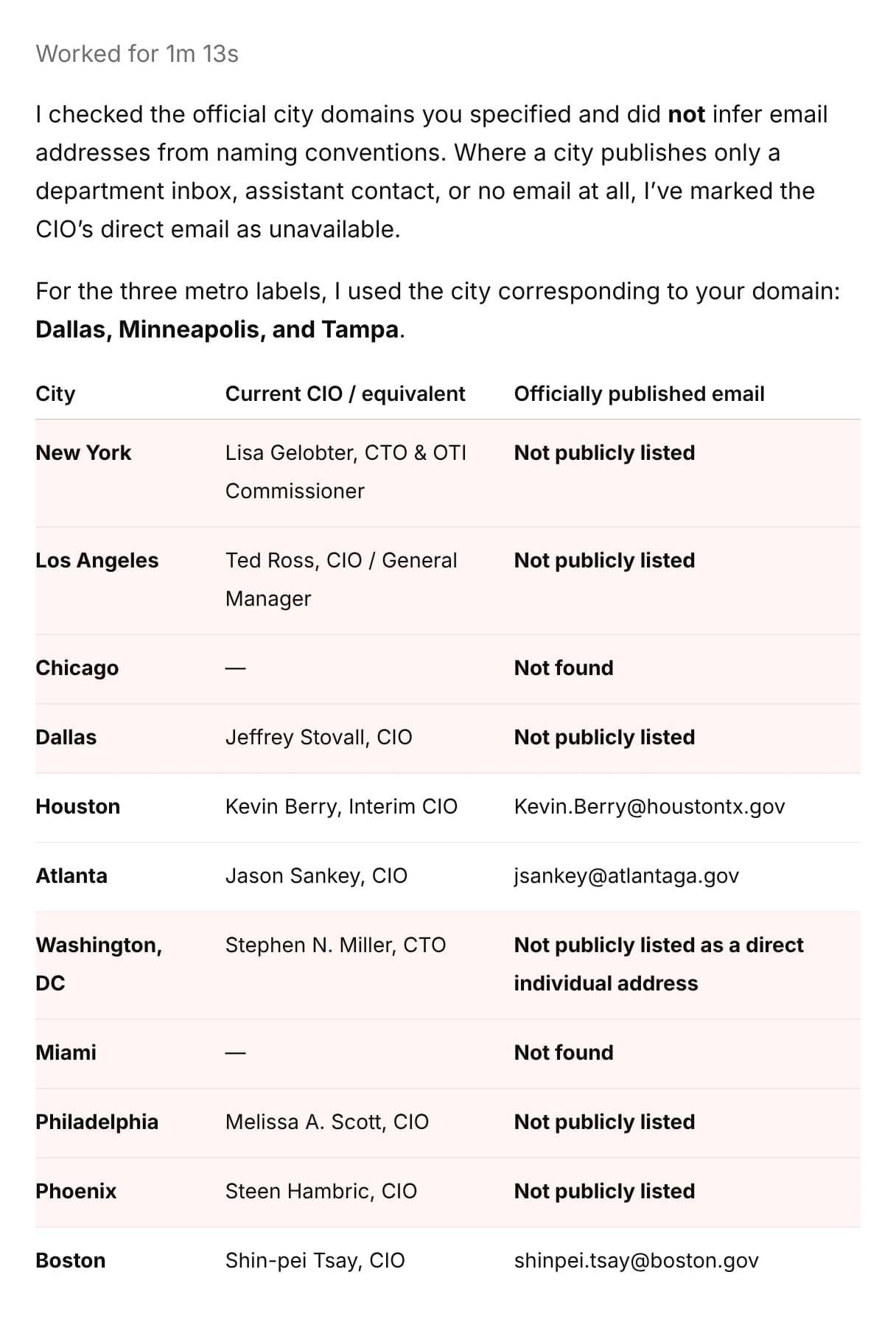
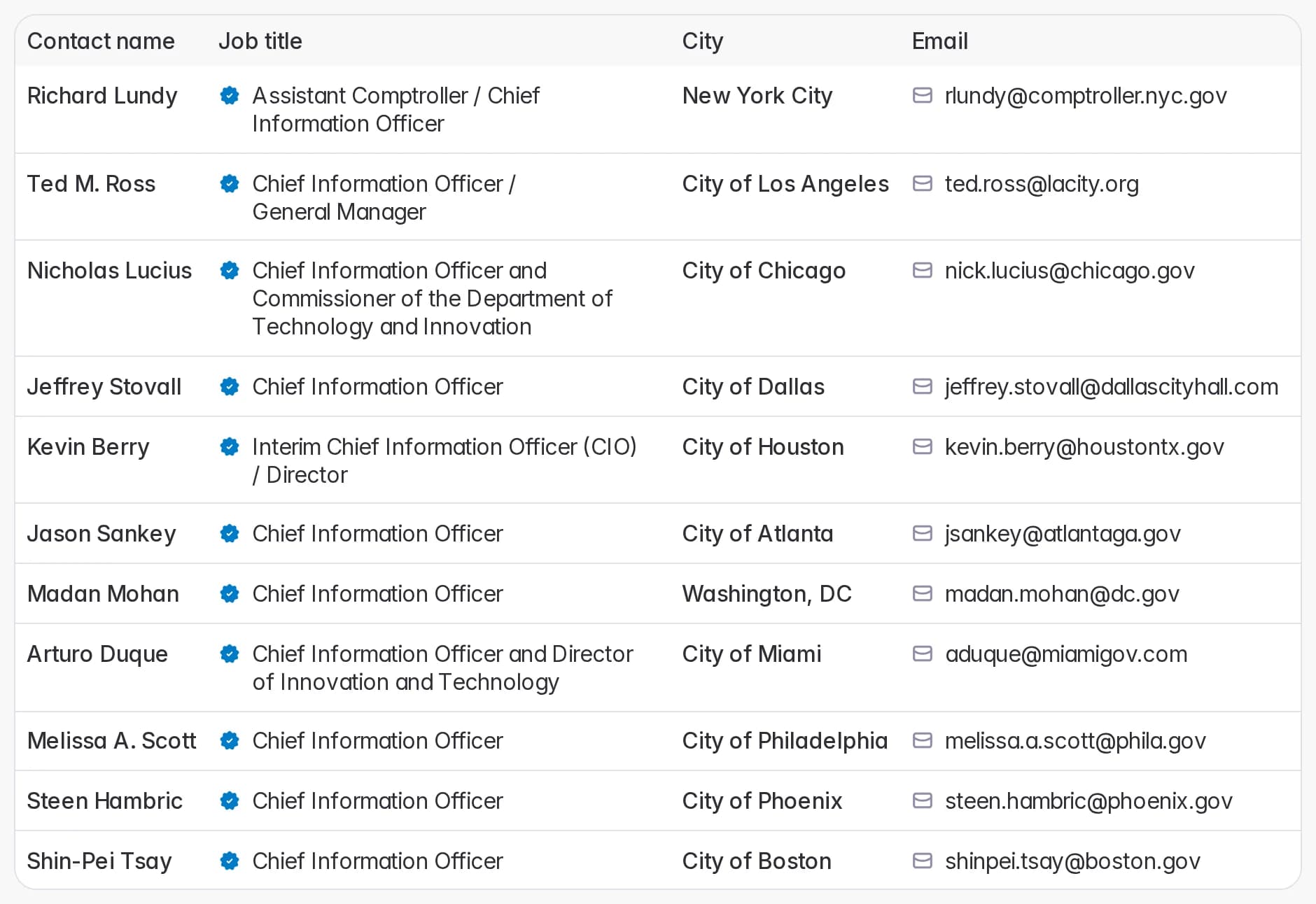
Why Starbridge contact data is better than general AI
- Direct CIO emails often aren’t public. City sites publish only a department inbox, phone number, or contact form, and legacy platforms, JavaScript rendering, and PDFs keep an LLM from scraping the rest.
- Starbridge reads agency directories, board minutes, PDFs, and verified .gov and .edu domains, then fills gaps through a waterfall of 8 enrichment providers.
- Every contact is verified: a validator confirms the person works at the agency, and a bounce-check confirms the email is live. The result is 98% contact accuracy, kept current in your CRM.
Test 3: CRM Integrations (i.e. Salesforce)
The prompt
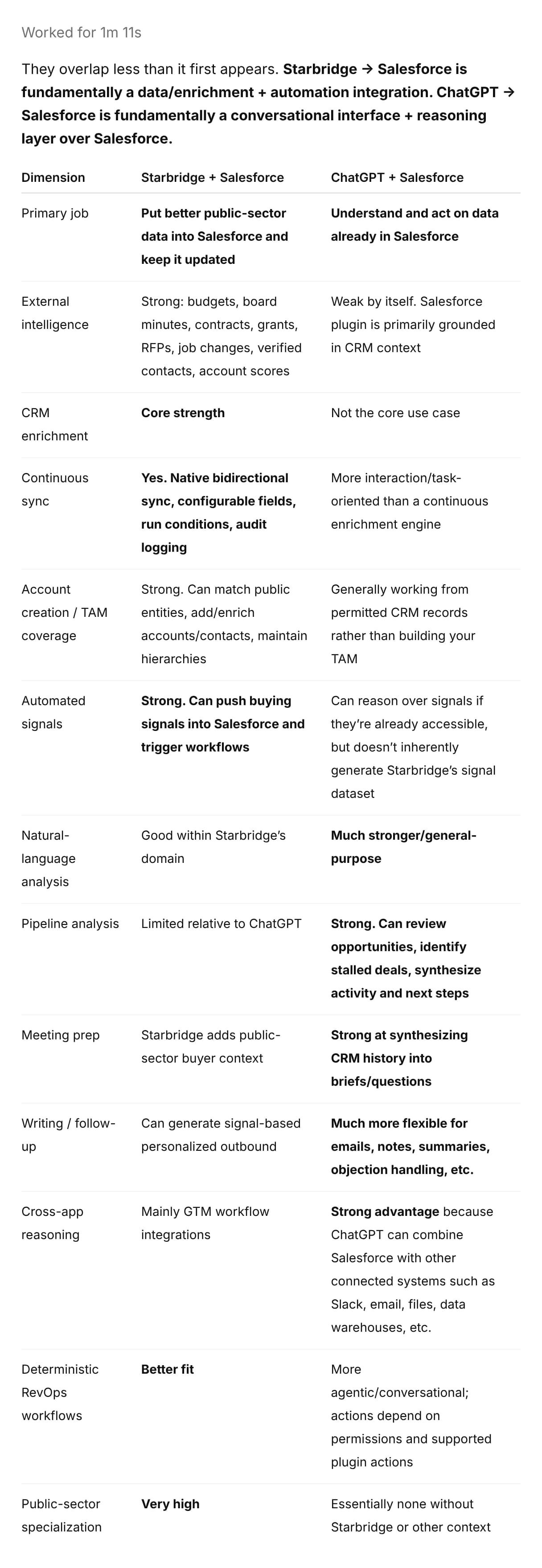
What are the pros and cons of ChatGPT Salesforce integration vs. Starbridge integration?
ChatGPT
Why general AI should be used alongside Starbridge for Salesforce
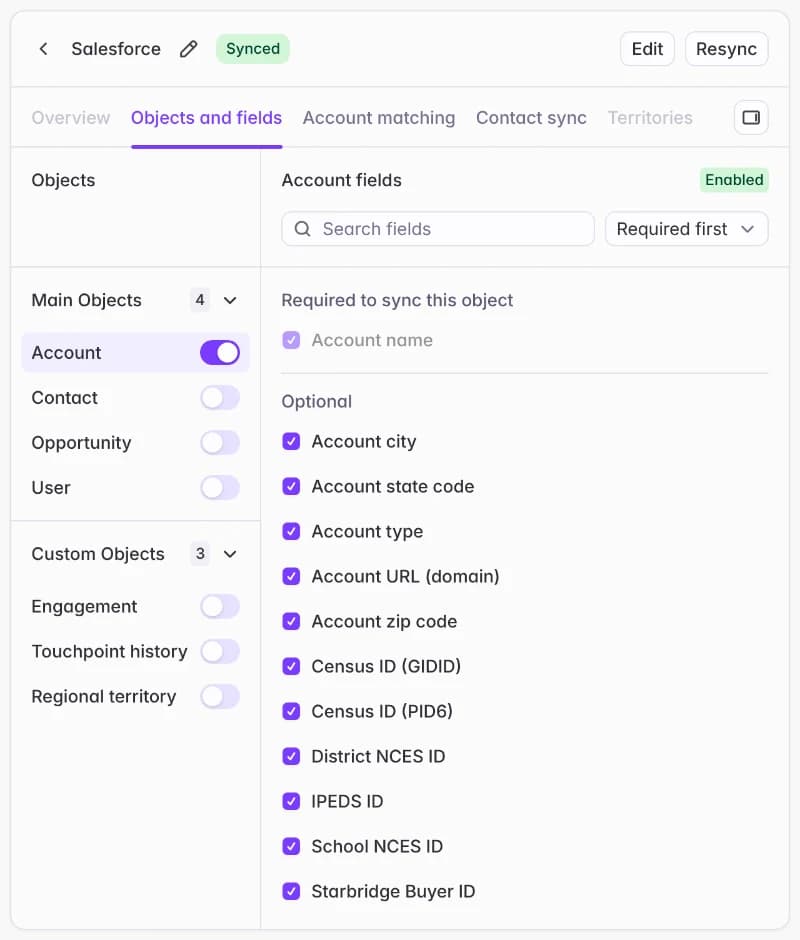
Starbridge puts public-sector data into Salesforce
- Without the core data like FOIA’d contracts and contacts, there is no data for ChatGPT to analyze
- Native bidirectional sync with configurable fields, run conditions, and audit logging
- Brings budgets, board minutes, contracts, grants, RFPs, and job changes into the CRM
ChatGPT reasons over what Salesforce already holds
- Works from CRM records, but doesn’t inherently have data like FOIA’d contracts and contacts
- Rates its own public-sector specialization as “essentially none without Starbridge or other context”
Use ChatGPT to reason over your CRM. Use Starbridge to fill it with the public-sector data worth reasoning over.
Starbridge MCP
Already using ChatGPT or Claude? Bring Starbridge into it.
The Starbridge MCP connects Claude and ChatGPT to live public sector intelligence. Research accounts, map competitors, and surface active RFPs in seconds.
- Map competitor deployments and open whitespace across your territory
- Generate a full account briefing, with buying signals and verified contacts, before any meeting
- Find active RFPs and competitor contracts expiring in the next 90 days, then draft the outreach