Where to find K–12 and higher education RFPs
See where K–12 and higher education RFPs get posted, from state portals and district sites to cooperatives, and how to spot buying intent early.

Public school districts and public universities generally advertise competitive RFPs under their applicable procurement rules. Yet no single website lists them all, making the country’s most transparent buying market one of the hardest to track. Here’s where to actually find them.
TL;DR: Where to find K–12 and higher education RFPs
Find K–12 and higher education RFPs on district and campus procurement pages, state portals, regional bid networks, and cooperative purchasing sites. Use aggregators and alerts to cover more sources, then verify deadlines and addenda with the issuing buyer. SAM.gov covers federal opportunities, so it is a supplementary source for teams targeting schools and universities.
Why there’s no single source for K–12 and higher education RFPs
Posting location depends on the buyer type and the procurement rules that govern it. State law sends many public universities to a central portal, while board policy lets nearby districts post on their own sites.
This means any database organized around states or portals will miss part of the market.
Buyer layers and how each one procures
Education buying runs in layers, and each layer posts by its own rules.
At the top, federal agencies buy research and program services through federal contracting channels.
Large federal programs like Title I are formula grants that flow from the Department of Education to states, which pass the money to districts. Districts that spend those funds on products and services follow applicable federal grant requirements as well as state and local purchasing rules.
State agencies come next. State portals carry statewide contracts and some public university solicitations, while other institutions use campus or university-system portals. State education agencies add statewide K–12 programs and approved vendor lists.
Local districts carry most of the volume. Board policy, within limits set by the state education code, lets each district decide where to advertise. Many districts choose their own website or a regional bid network.
Higher education institutions and cooperatives cut across those layers. A public university follows state rules, while a private college follows its own. Cooperatives competitively award master contracts that eligible members can use when their procurement rules and the contract’s scope permit it.
How K–12 districts and higher education institutions buy differently
School districts mostly post on their own websites, regional bid networks, and local newspapers.
State education codes set the dollar thresholds that require a formal bid, and local board policy sets the rest.
Public universities may post on a state portal, a university-system portal, or their own procurement site.
Central procurement also brings vendor registration, a security review, and sometimes an approved vendor list. Allow time for those steps, since review periods vary by institution and purchase.
Private colleges generally follow their own purchasing policies, although federal grant conditions can add procurement requirements.
Many invite vendors directly, so relationships matter more than portals at private schools.
Here’s how the two public segments compare on the basics:
| Comparison point | K–12 school districts | Public universities |
|---|---|---|
| Typical posting location | District website, regional bid network, local newspaper | State central portal or campus procurement site |
| Who signs the PO | District business office, with board approval above set thresholds | Central procurement office |
| Common procurement paths | Formal bid, cooperative contract, small purchase | Formal RFP, state contract, cooperative contract |
The differences explain why K–12 and higher education teams need separate watch lists. One portal strategy will not cover both segments.
Where to find K–12 and higher education RFPs, source by source
The map below covers every major source type for education bids. Each entry shows what the source covers, what it misses, and how often to check it.
Federal sources
SAM.gov lists federal contract opportunities, including Department of Education research and program support contracts. The Department of Education also publishes contracting information on its own procurement pages.
Federal sources seldom include district or campus purchases. SAM.gov lists federal opportunities, while districts and campuses funded by programs like Title I usually post through state and local channels instead. Treat federal sources as a supplement, not a primary feed.
Set a saved search on SAM.gov using NAICS codes and keywords that match what you sell, including educational services where relevant. Enable alerts and check notices often enough to meet response deadlines.
State procurement portals and state education agency sites
State central portals carry many public university solicitations and statewide contracts, though university systems and districts often run their own procurement sites.
Examples include NJSTART in New Jersey, COMMBUYS in Massachusetts, and Cal eProcure, California’s state portal for state-agency bids. Vendors register separately in each state.
State education agency sites cover the K–12 side. These sites post statewide K–12 programs and the approved vendor lists that districts buy from.
Monitor each target state’s portal and education agency site, using alerts where available. Portal formats and registration rules vary by state, so register early in your priority states.
Registration often enables email notices by commodity code, which reduces manual checking. Each notice still covers one state, so multi-state territories need a routine for every portal.
District and college procurement pages
District purchasing pages and university procurement offices host many solicitations that appear nowhere else. A district might post a curriculum software RFP only on its business office page for three weeks, then close it.
K–12 also hides bids in places reps seldom check. For example, board meeting PDFs and agendas can record approval of a solicitation before the bid posts.
Some state codes also require public notice of bids. For covered purchases of $100,000 or more in a 12-month period, Texas Education Code section 44.031 requires districts to use an authorized procurement method. Its notice rules generally require publication in a county newspaper once a week for two weeks before bids or proposals are due.
This layer is where most teams fall behind. Thousands of district pages each have their own format and update schedule. Checking them by hand means a rep covers a small territory well or a large territory badly.
Cooperatives and bid platforms
Cooperatives publish their own solicitations and can spare eligible members a separate bid. K–12 cooperatives like TIPS and BuyBoard competitively award master contracts, and eligible member districts can buy from those contracts when their purchasing rules permit it.
Sourcewell, OMNIA Partners, and NASPO ValuePoint round out the broader cooperative set.
Bid platforms and aggregators form the second category. Some are e-procurement systems that districts use to publish their own bids. Others are paid aggregators that bundle many sources into one subscription, with coverage that varies by state and buyer type.
Each source above covers one slice of the market. Reps stitch those slices together by hand and still miss bids. Teams need a way to turn RFP discovery into execution, with every relevant bid in one place.
Starbridge built the AI RFP Finder & Proposal Writer for that outcome. Starbridge is the AI GTM platform that turns public buying data into action for companies selling to state and local government, K–12, and higher education. The AI RFP Finder & Proposal Writer pulls thousands of district portals, state procurement sites, and third-party bid boards into one personalized feed.
Book a demo today to learn more.
How to qualify and filter an education RFP in minutes
Every RFP listing follows the same structure. The core fields are the buyer, the posted and due dates, and the scope description. Addenda, pre-bid meetings, and evaluation criteria show how the buyer will decide.
Run each listing through a fast checklist before opening the full document:
- Does the scope match what you sell today, without custom work?
- Is the timeline realistic for both a response and an implementation?
- Do the specs leave a realistic path for your product to qualify?
- Can you meet privacy, security, and assurance requirements, such as FERPA obligations and any required SOC 2 report?
A “no” on any line is a reason to pass.
We recommend not “trying your luck,” and instead moving on and focusing on the bids you can win.
Filter by organization type next, starting with public school districts, higher education institutions, and cooperatives. Special districts make a useful fourth filter for facilities or transportation services.
Starbridge’s AI RFP Finder & Proposal Writer also flags RFPs that name a competitor. Reps skip wired bids without reading long documents and spend the saved hours on accounts they can still influence.
Why manual portal checking breaks at scale
Portal-hopping costs more rep time than leaders budget for. Reps juggle separate logins and inconsistent formats, and bids may post and close between checks.
Teams new to RFPs can close that gap with a repeatable workflow:
- Find new RFPs in one centralized feed.
- Qualify each RFP with a score for product fit, region, and win likelihood.
- Assign the RFP to the account owner with a verified contact attached.
- Respond from approved answers, then sync status back to the CRM.
Daily alerts replace the manual find step. Teams configure alerts once by keyword, region, and buyer type.
Starbridge’s AI RFP Finder & Proposal Writer turns the remaining steps into execution. The feature scores each RFP for fit, then drafts responses from reusable VPAT, FERPA, and integration answers.
Also, an RFP without the right contact stalls. That’s why Starbridge’s Contacts & Company Data attaches verified decision-makers with 98% email accuracy across a 14,000-email test.
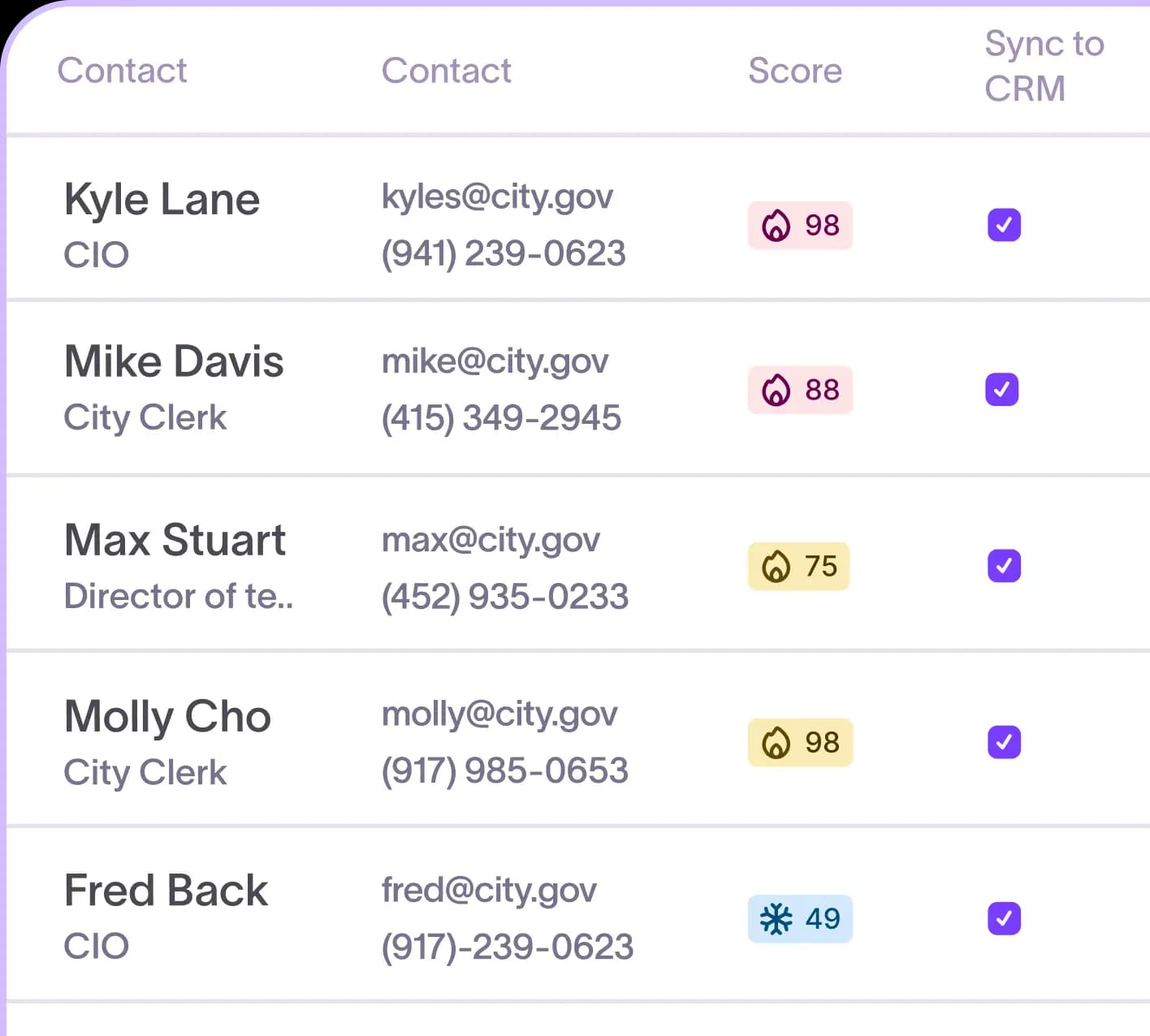
Bi-directional Salesforce and HubSpot integrations sync, clean, and enrich the CRM.
What to watch before an RFP posts
A bid feed, however complete, shows only the last step in the buying cycle.
Buyers rarely know every option in a category, so they consult vendors early to learn what’s possible. The vendor who educates the buyer shapes the RFP evaluation criteria, so a team finding the RFP on a portal is already late.
Early buying signals that come before a solicitation
Buying signals are early signs that a district or university plans to spend, such as a new grant or a contract about to expire. Three early buying indicators carry the most weight:
- Board discussions that name a problem or project in your category
- Budget line items that fund a new initiative
- Grant awards with money earmarked for a specific purpose
Early buying signals like board discussions can surface months before a formal solicitation, giving you time to understand and inform requirements.
So do leadership changes and contract expirations.
New leaders such as directors and superintendents may review inherited vendor relationships. Reach out early with something relevant to the new role. When a champion leaves, pursue the new account and backfill the old one.
Tracking these buying signals manually across thousands of districts doesn’t scale. Starbridge’s Buying Signal Monitor lets teams act on early buying intent across 320k+ entities. Each alert arrives with a verified contact, a reason to reach out, and outreach copy.
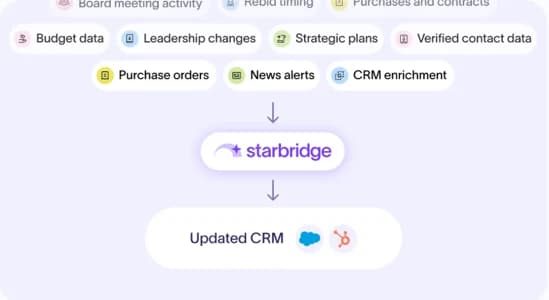
In its first week, GovWell booked five meetings from alerts on meeting agendas that mention permitting. The municipal permitting software company now sources 15% of its qualified pipeline from Starbridge. Book a demo today to learn more.
Incumbents, contract history, and re-bid timing
Awarded and closed bids show who won and at what price. Purchase orders and contracts obtained through FOIA (Freedom of Information Act) requests can show costs and expiration dates.
Contract terms and renewal windows vary by buyer and category. Treat each expiration as a 9- to 12-month planning opportunity, then confirm the buyer’s actual renewal and notice deadlines.
Teams that win displacement deals build relationships while the incumbent is still in place.
Awarded bids also reveal subcontracting openings. A winning vendor may need a partner for implementation, training, or integrations that the contract scope requires.
Pulling this record by hand means filing public records requests and waiting on responses. Starbridge’s Public Spend Intelligence gives teams that context instantly.
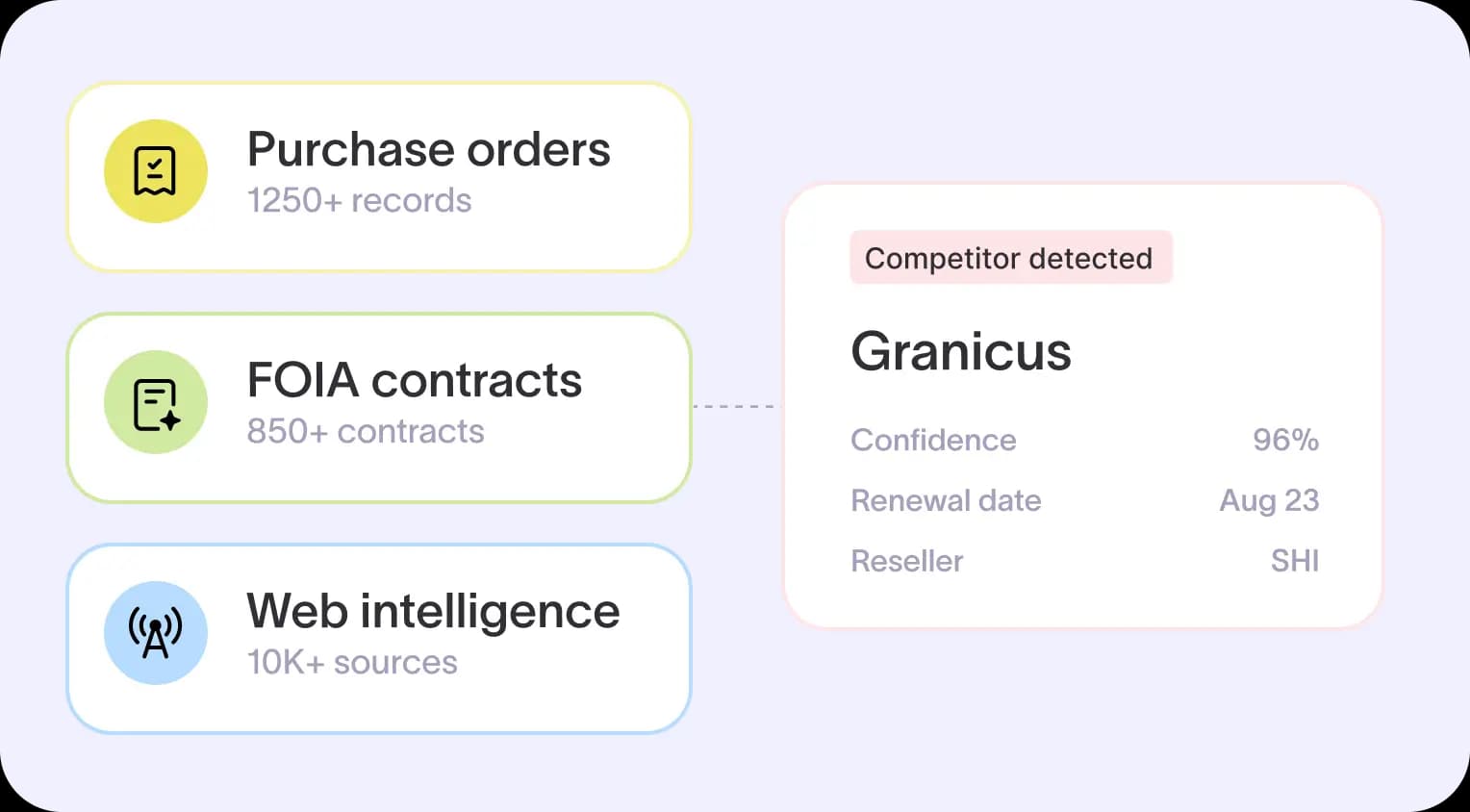
Reps see full competitor contracts with pricing, opt-out clauses, and expiration dates.
Out of the box, Starbridge has purchase order data for 77% of state and local government, K–12, and higher education institutions. Expiration dates across a territory also show which accounts to work first.
Paths without a new full RFP and when buyers use them
Many education purchases don’t require a new full RFP.
For example, buyers use RFQs for simpler purchases and small-purchase or sole-source thresholds for smaller ones. Cooperative contracts let a buyer piggyback on a bid another buyer already ran.
Existing contract vehicles are often the fastest path from a verbal yes to a signed PO.
Starbridge provides Contract Vehicle Access through the platform, led by TIPS for K–12 buyers. Sourcewell, OMNIA Partners, and NASPO ValuePoint are also available.
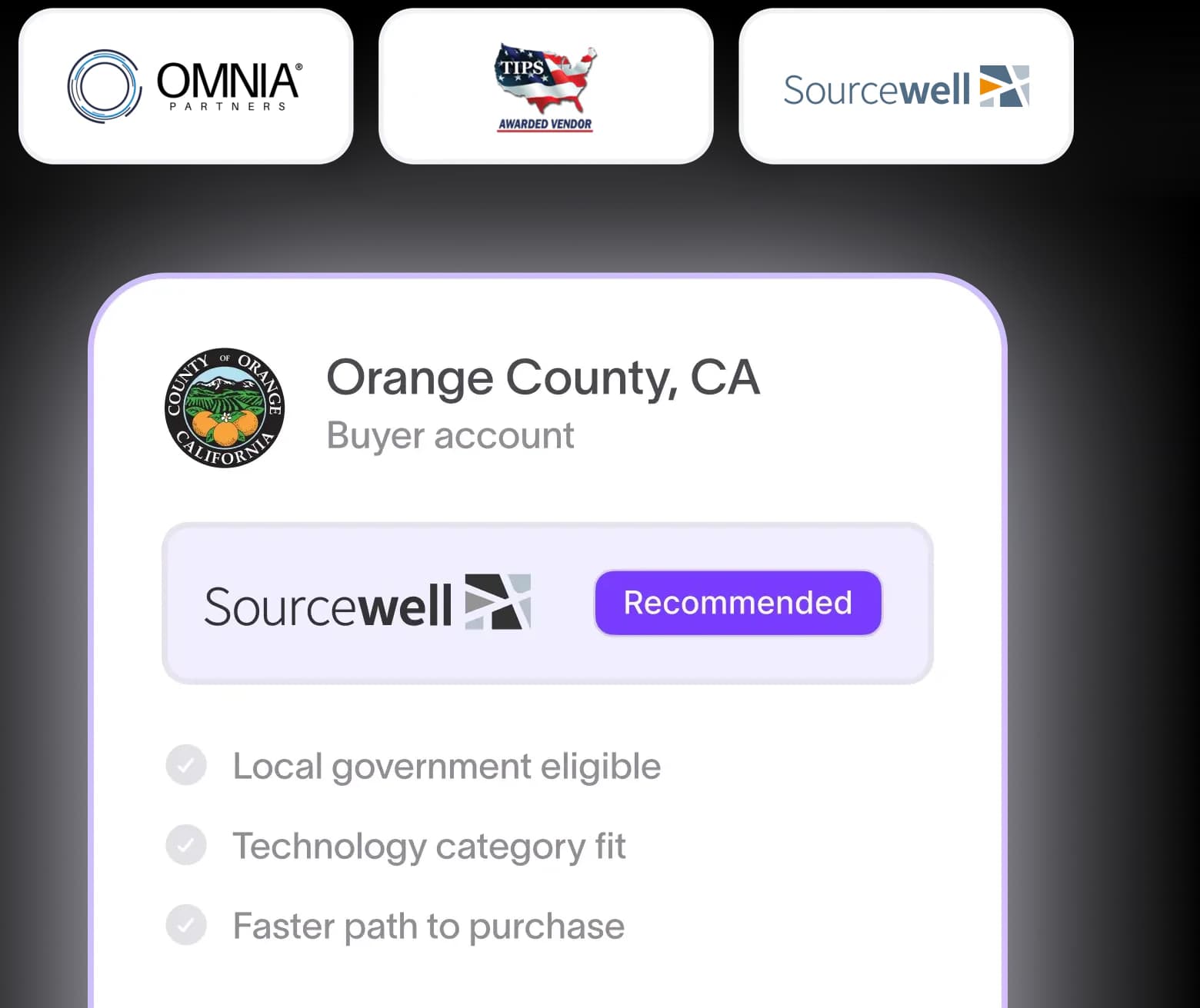
Starbridge handles compliance, paperwork, and renewals, so each won deal becomes revenue faster. Book a demo today to learn more.
The best RFP is the one you saw coming
Education RFPs scatter by buyer type, so a source map gets you to the bid and early buying signals get you there first.
Starbridge is the AI GTM platform built on the most comprehensive dataset of public-sector buyers and buying signals. Companies selling to state and local government, K–12, and higher education use Starbridge to identify, prioritize, and engage high-intent opportunities before the competition. Contract vehicle access then carries each won deal to a signed contract.
Book a demo to see education RFPs and buying signals in one place and win more deals.
Frequently asked questions
Most K–12 RFPs post on the district’s own website, a regional bid network, or a public notice in the county paper where state law requires it. State education codes and local board policy decide which. A district buying through a cooperative contract like TIPS or BuyBoard may not post at all.
Public universities rarely post their own purchases on SAM.gov. They usually post on their state’s central portal or their own procurement site, while private colleges often invite vendors directly. SAM.gov mainly lists federal contracts, such as Department of Education research and program work.
Registering on each target state’s portal enables notifications by commodity code, but you still need to track district pages and bid networks separately. Starbridge’s AI RFP Finder & Proposal Writer sends daily alerts from thousands of portals, matched to your keywords, region, and buyer type.
Yes. Purchases below applicable formal bidding thresholds may use simpler procedures, although quotations may still be required. Sole-source awards need a separate justification. Eligible districts can also use cooperative contracts such as TIPS, BuyBoard, or Sourcewell when their purchasing rules permit it.
Start with the original award in board meeting minutes or on the procurement page, which usually lists the contract term. If the term is not public, a public records request for the contract and purchase orders may reveal it. Starbridge’s Public Spend Intelligence surfaces expiration dates from full competitor contracts without the wait.
Explore our use case library
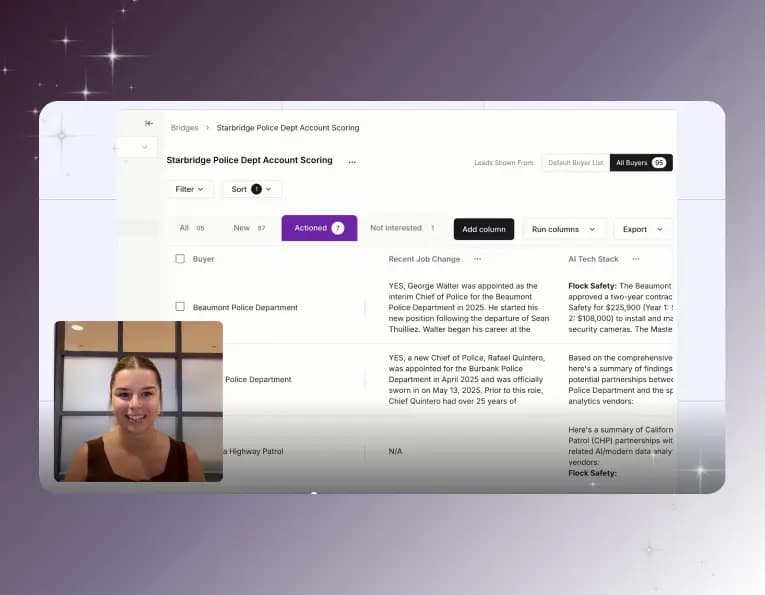 Automate account research with AI agentsStop manually researching accounts. Starbridge AI agents automate account research by monitoring buying signals 24/7 and surfacing the right contacts.
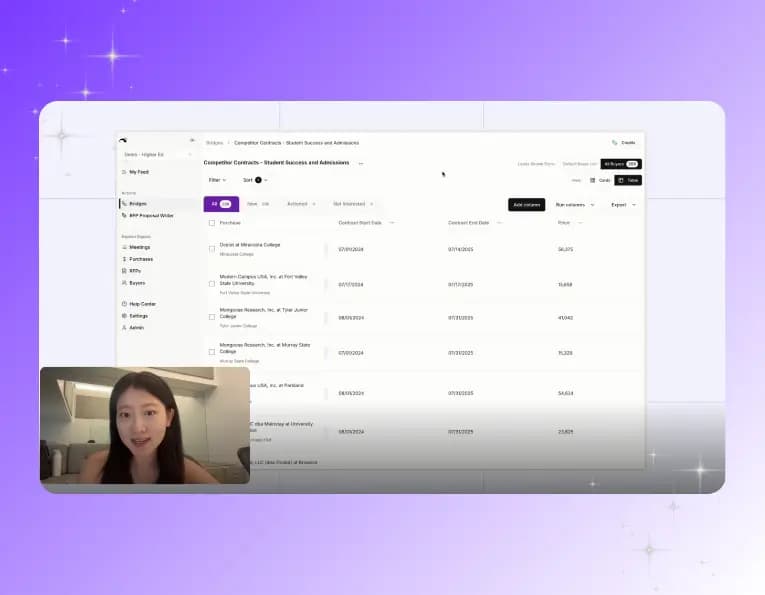 Identify competitor contract expiration datesThe RFP is usually a formality. Starbridge surfaces competitor contract expiration dates so your reps reach accounts before the renewal cycle closes.
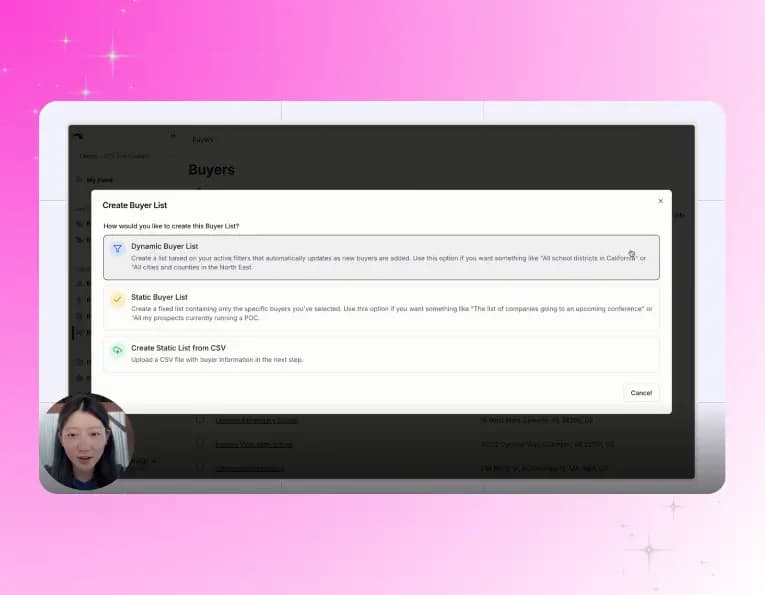 Create a conference campaignTurn conference badge scans into pipeline. Import your contact list, surface buying signals across every account you met, and follow up with context.